Best Drain Field Replacement near Hendersonville, NC | Trusted Local Contractor
If you’re reading this, you probably have a yard that never seems to dry out, toilets that gurgle, or a smell you can’t quite hide with candles. You’re worried about your family’s health, your lawn, and the bill that may come with fixing it. We get it. At Diversified Services, we help homeowners around Hendersonville and the greater Western Carolina–Upstate SC region understand what’s really going on and choose the right fix—without games, pressure, or mystery pricing.
We’re based in Pickens County, SC, and we serve Pickens, Greenville, Oconee, Anderson (SC) and Transylvania and Henderson County (NC). We’re not the biggest outfit, but we’re obsessive about tailoring solutions to your property, soil, slope, and budget. In this guide, we’ll show you how to spot a failing drain field, compare repair vs. replacement, understand local codes, and choose the best contractor for Hendersonville and nearby towns like Flat Rock, Mills River, Etowah, and Fletcher.
Who We Help in Henderson County: Homeowners With Failing Drain Fields
Most folks call us after they notice one or more of these headaches:
Standing water or squishy ground over the septic field
Slow drains in the house, especially after doing laundry
Sewage smells outside or near the leach field
Gurgling in sinks or tubs when other fixtures run
Backups during big family weekends or rainy spells
If that sounds like your home, you’re in the right place. This article will break down what’s happening, what your options are, and what it takes to get back to normal quickly and safely.

Clear Signs Your Drain Field Is Failing (Hendersonville & Flat Rock)
A drain field (leach field) is a set of trenches or chambers that spread treated wastewater into the soil. When it fails, the soil can’t absorb water like it should. Watch for:
Persistent soggy patches over the field—even when it hasn’t rained.
Lush green stripes where trenches run—looks pretty, but often means trouble.
Strong odors outdoors. That’s not “country air”; that’s a warning sign.
Indoor slowdowns—toilets, showers, and sinks draining sluggishly all at once.
Backups during storms—Western NC rains can expose weak drain fields fast.
If you’re seeing two or more of these, don’t pour additives or drain cleaners. You may make it worse. Get a professional inspection and a septic evaluation.
Repair vs. Replacement: How to Choose for Your Septic Drain Field
Not every failing field needs a full replacement. Here’s how we think through it:
Repair makes sense when:
The tank is healthy and pumped on schedule
The failure is localized (crushed lines, root intrusion)
The soil still percs well in most of the field
You have room to add a small expansion or redirect flows
Replacement is smarter when:
The entire field is saturated or smeared
The soil no longer percs where the field sits
There’s a history of backups and seasonal flooding
You’re planning a long-term solution and want warranty-backed peace of mind
We’ll always start with diagnostics and design the smallest fix that will actually last.
How Drain Field Replacement Works: Our Step-by-Step Process
Site Visit & Questions
We listen first—what you’ve noticed, when it started, how your home uses water.Records & Testing
We look up existing permits if available, check the septic tank, and run perc/soils tests to see how water moves in your soil.Design & Layout
We plan a system sized to your home and soil: trench length, depth, spacing, and distribution method (gravel, chamber, or advanced treatment).Permits & Approvals
We coordinate with Henderson County environmental health for permits and inspections.Installation
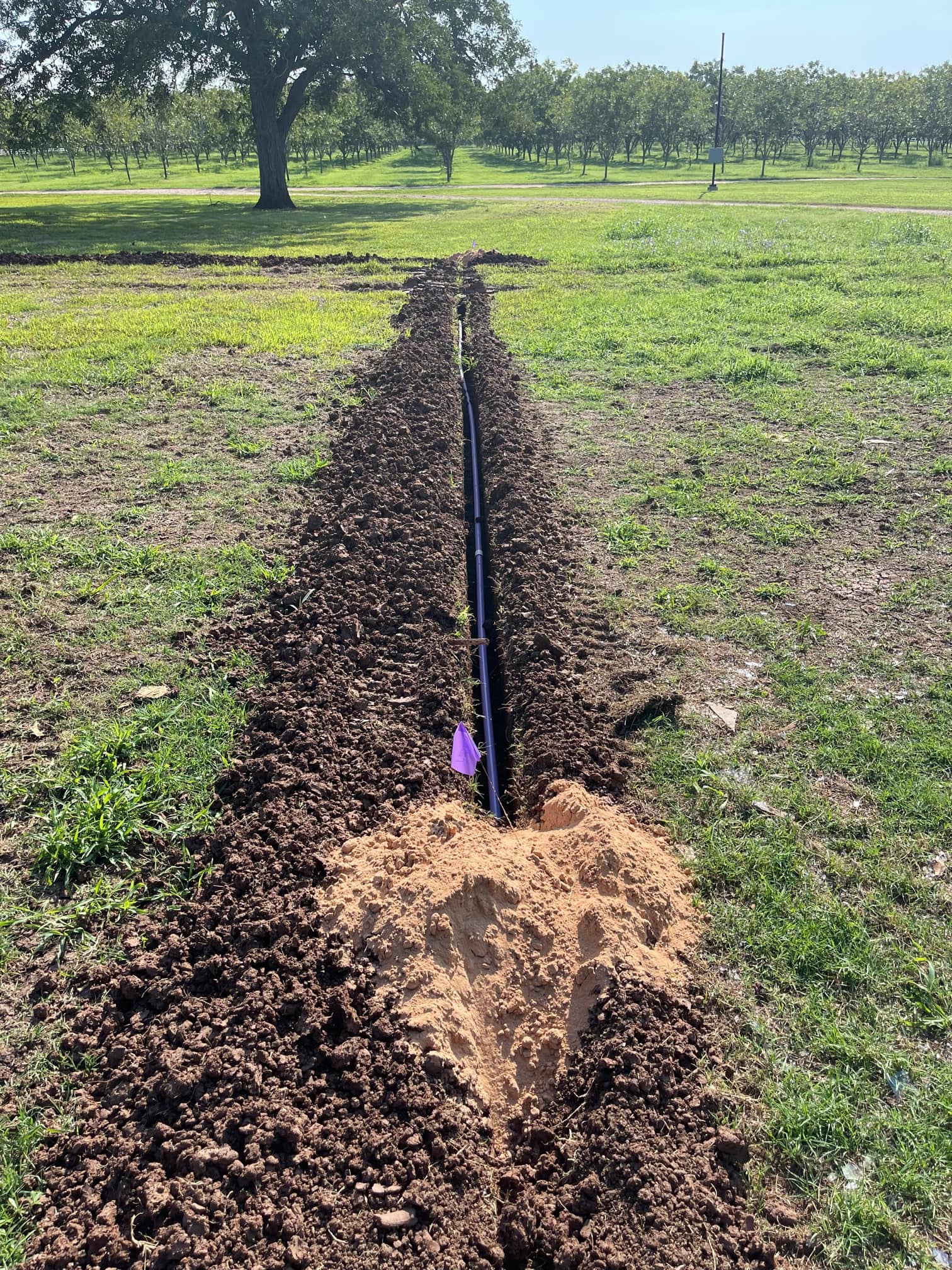
We protect your property, manage material deliveries, remove failed media, and install the new field per plan.Inspection & Backfill
County inspection, then careful backfill and grading for drainage.Final Walkthrough
We show you valve locations (if any), share care tips, and outline your maintenance plan.
Soils, Slopes, and Rain: Why Western NC Conditions Matter
Henderson County and the surrounding Blue Ridge area have variable soils—sandy loams in some spots, red clays in others, and slopes that shift drainage patterns fast. Heavy rain events can turn a “just okay” field into a failure. Good design here means:
Respecting slope and runoff paths
Using distribution methods that match soil percolation
Keeping safe setbacks from wells, streams, and property lines
Planning for seasonal saturation—especially winter and spring
Local experience matters. What works on flat, sandy coastal soils won’t last on a hillside near Mills River.
Permits, Codes, and Inspections in Henderson County, NC
In Henderson County, your drain field replacement requires:
Site evaluation and system design by qualified professionals
Permit from the local environmental health department
Inspection(s) before cover-up
As-built documents for your records (when required)
We handle coordination so you don’t have to. Expect a clear timeline, inspection windows, and updates as we go.
Drain Field Replacement Cost Near Hendersonville: What Affects the Price
We don’t post one-size-fits-all numbers because every yard is different, but here’s what drives cost:
Soil conditions & perc rate: Poor percolation often means larger fields.
System type: Gravel trench vs. chamber vs. advanced treatment.
Access: Tight yards, fences, trees, and steep slopes can add time and equipment needs.
Distance to materials: Hauling gravel, chambers, sand, or engineered media.
Pump requirements: Gravity is cheaper; pumps add components and power.
Restoration: Sod, seed, erosion control, and drainage grading after backfill.
We’ll give you a written estimate with line items so you know where every dollar goes.
Gravel vs. Chamber vs. Advanced Systems: Which Lasts Longer Here?
Gravel Trench Systems
Pros: Time-tested, available materials, good for many soils.
Cons: Heavier install footprint; more trucking; can clog if not designed right.
Chamber Systems
Pros: Faster install, good for tight or uneven sites, high void space for distribution.
Cons: Must be sized right; not a cure-all for poor soils.
Advanced Treatment (e.g., ATUs, drip dispersal, sand filters)
Pros: Polishes effluent, helps on marginal soils or tight sites, strong performance when maintained.
Cons: Higher upfront and maintenance costs; requires monitoring.
The “best” system is the one that matches your soil, slope, space, and budget—not what’s trendy on the internet.
How to Vet a Drain Field Contractor (Questions, Red Flags, Proof)
Ask these questions:
Can you explain your design based on my soils and water use?
What permits are needed, and who pulls them?
What system types did you consider, and why this one?
What’s the timeline, and what could delay it?
What’s covered under your warranty, and for how long?
How will you protect existing landscaping and restore the yard?
Red flags to avoid:
“We can start tomorrow—no permit needed.”
Vague pricing (“It depends… we’ll see”).
No references, no pictures, no plan.
Pushy upsells that don’t match your soil test.
We share our plan in writing, provide references, and welcome questions.
Timeline: How Long Drain Field Replacement Really Takes
Evaluation & Design: 1–7 days (depends on access and records)
Permitting: A few days to a couple of weeks (county schedule)
Installation: Usually 1–3 days for typical residential systems
Inspection & Backfill: Same day or next business day after install
Site Restoration: Often same week (weather dependent)
We plan around weather and inspections so you’re never guessing.
What to Expect on Installation Day (Noise, Access, Yard Impact)
Noise & Equipment: You’ll see excavators, compactors, trucks, and possibly a pump installer.
Access Paths: We map routes to limit ruts and protect trees when possible.
Safety: We keep the site neat, flag utilities, and secure open trenches.
Yard Impact: There will be disturbed soil; we grade smooth and handle erosion control.
Communication: You’ll know who is on site, what’s happening next, and when we expect inspection.
Protecting Your New Drain Field: Simple Care That Extends Life
Pump the tank on schedule (every 3–5 years for many households).
Spread out laundry and big water uses—avoid flooding the system.
No vehicles, sheds, or patios over the field.
Plant grass, not trees or deep-rooted plants, above trenches.
Fix leaks fast—running toilets and dripping faucets add up.
Skip additives that promise miracles; they can disrupt healthy bacteria.
A little care adds years to your system’s life.
Seasonal Tips: Replacing a Drain Field Before Heavy Rains or Freeze
Fall is a smart time: soils are workable, temps are mild, and you’re ready before winter rain.
Winter installs are possible, but weather can slow inspection schedules and soil work.
Spring can be muddy—good planning helps avoid delays.
Summer is fine, but drought-hardened soils may need extra prep.
We schedule around local weather patterns so your install stays on track.
Why Diversified Services (Pickens County, SC) Serves Hendersonville Well
Local soils and slopes expertise: We work these hills every week.
Right-sized team: You get the owner’s attention and a crew that knows your project.
Custom designs: We don’t copy-paste; we match the solution to your site.
Clear pricing: No surprises, no “gotcha” add-ons.
Respect for your property: Clean site, careful access, and a tidy finish.
We don’t brag. We just show up, design it right, install it clean, and stand behind our work.
Service Areas We Cover: Hendersonville, Etowah, Mills River & Beyond
From our base in Pickens County, SC, we serve:
Pickens, Greenville, Oconee, Anderson (SC) and Transylvania, Henderson County (NC)—including Hendersonville, Flat Rock, Mills River, Etowah, Fletcher, Laurel Park, and nearby communities.
If you’re just outside this list, reach out. If we can’t help, we’ll gladly point you to someone who can.
Frequently Asked Questions: Hendersonville Drain Field Replacement
Q: Can I just add more pipe and skip permits?
A: No. Any field expansion or replacement needs approval. Skipping permits risks fines and a system that won’t pass when you sell.
Q: How long will a new drain field last?
A: With good design and maintenance, many systems last 20+ years. Soil, use, and care matter.
Q: Will you tear up my whole yard?
A: We limit disturbance to the work area and access path, then grade smooth and stabilize soils. We’ll discuss re-seeding or sod options.
Q: Do I need an advanced system?
A: Only if your soil, lot size, or slope requires it. We’ll compare options with honest pros and cons.
Q: What if it rains during my project?
A: We watch the forecast and adjust to protect trenches and prevent smear. If a delay is smarter, we’ll say so.
Get a Straightforward Estimate From Diversified Services
If you’re dealing with soggy spots, slow drains, or septic smells, you don’t have to guess. We’ll assess your system, explain the best options for your soil and budget, and give you a clear, written estimate.
Diversified Services | Based in Pickens County, SC
Serving Pickens, Greenville, Oconee, Anderson (SC) and Transylvania, Henderson County (NC)
Next step: Tell us what you’re seeing and where you’re located. We’ll schedule a quick site visit, confirm your best path forward, and get your home back to normal—no drama, no runaround.
