The Best Septic Install Near Greenville County, SC | How to Choose the Right Contractor
1) Septic Install Near Greenville County, SC: What Homeowners Really Need to Know First
If you are reading this, you likely have a new build, a failing system, or a property that never had a sewer hookup. You need clear answers, not jargon. You want a clean yard, a safe system, a fair price, and a contractor who does what they say. At Diversified Services, we get it. A septic install is not just a hole and a tank. It is a plan, a set of approvals, careful digging, and a system built for your soil and slope. When you choose a septic install near Greenville County, SC, the right design and the right team make all the difference.

2) Who You Are, What You’re Facing: A Quick Reality Check for Greenville County Homeowners
You are busy. You may be worried about cost. You may have heard horror stories about wet yards, slow drains, or surprise change orders. Maybe you are standing on red clay and wondering how water will drain. Maybe you feel pressure to pick the cheapest bid. We hear these worries every day. Your fear is normal. Our job is to replace fear with facts, and then build a system that fits your land and your life.
3) How Septic Systems Work in Plain English and Why Local Soil Matters
A septic system is simple at its core. Wastewater flows from the house into a tank. Solids settle, liquids move on to a drainfield, and the soil finishes the cleaning process. The key is the soil. In our area, we see red clay, sandy loam, and mountain soils with rock. Each soil type drains differently. Clay can hold water. Sandy soil can release it fast. The right design depends on a soil test and a smart layout. Good design keeps your yard dry, protects your well or nearby streams, and helps your system last for decades.
4) Permits, Soil Tests, and Local Rules: Getting Your Septic Install Near Greenville County, SC Approved
Before a shovel hits the ground, you need two things: a soil evaluation and a permit. A licensed evaluator checks your soil depth, texture, and drainage rate. From that, we choose the tank size and drainfield type. Then the county reviews the plan and issues a permit. Cutting corners here leads to bad installs and failed inspections. We handle the paperwork, the site plan, and the scheduling. Your role is simple. Approve the plan, clear access, and let us manage the steps.
5) Septic Install Cost in Greenville County: What Drives the Price and How to Plan a Smart Budget
Cost depends on four main factors:
Soil and layout. Tight lots, steep slopes, or tough soils may need special designs.
System type. Gravity systems cost less. Pump systems and advanced treatment units cost more.
Tank and drainfield size. Bigger homes with more bedrooms need larger systems.
Site work. Tree clearing, rock removal, long trenches, and driveway repairs add time and materials.
A smart budget lists more than the tank and pipe. It includes permits, inspections, gravel, risers, pumps if needed, electrical connections for pumps, and final grading. Beware of bids that leave out these pieces. The lowest number on paper can become the highest number in real life.
6) Tank Types and System Options: Concrete vs Plastic, Gravity vs Pump
Concrete tanks are heavy and durable. They resist floating and handle soil pressure well. Plastic tanks are lighter and easier to set but need careful backfilling and proper anchoring in wet areas. The best choice depends on soil, water table, and access.
Gravity systems use natural slope. They cost less and have fewer moving parts. Pump systems lift effluent when the lot is flat or the drainfield sits higher than the tank. With pumps, design and quality parts matter. We select components with long service records and easy maintenance.
7) Red Flags to Avoid: Common Septic Install Problems and How to Spot Bad Work Early
No soil test. Guessing at the drainfield is a path to failure.
Shallow cover on lines. Lines too close to the surface can freeze or get damaged.
Poor grade control. Wrong slopes lead to backups or uneven distribution.
Missing risers and cleanouts. If you cannot access the tank lid or filter, you cannot service the system.
No as-built documentation. After install, you should receive a map of tank and line locations for future service.
If you see any of this on a bid or job site, stop and ask questions.
8) How to Vet a Contractor: Licenses, Insurance, References, and the Questions That Save You Money
Ask for proof of license and insurance. Request local references from the last year. Then ask these questions:
Who performs the soil evaluation and final layout?
Gravity or pump, and why?
What is included in the price besides the tank and lines?
How will you protect my yard, driveway, and trees?
What are the permit fees, inspection steps, and target dates?
What is your plan if you hit rock or groundwater?
What does the warranty cover, and how do I reach you for service?
A professional will answer clearly and put promises in writing.
9) Our Process at Diversified Services: From Site Walk to Final Inspection
Step 1: Discovery call and site walk. We learn your goals, number of bedrooms, and building plans. We study access and slope.
Step 2: Soil evaluation and design. We coordinate testing, select a system type, and size it correctly.
Step 3: Permit and schedule. We submit the plan, handle questions, and set a timeline.
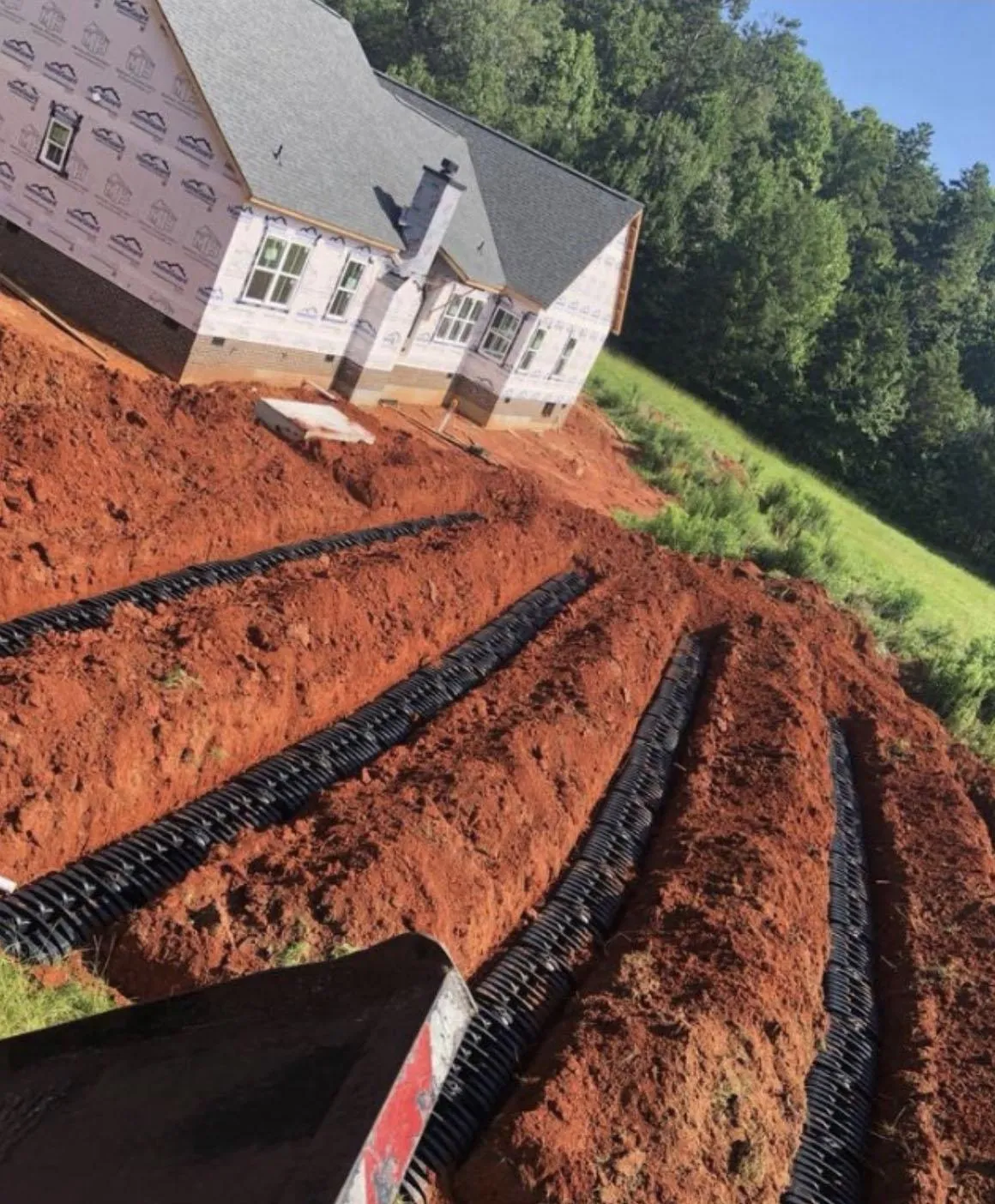
Step 4: Install. We protect your property, dig only where needed, set the tank, build the drainfield, and connect the house line.
Step 5: Quality checks. We inspect grades, joints, baffles, and filters.
Step 6: County inspection. We meet the inspector on site and address any notes.
Step 7: Final grade and handoff. We smooth the yard, mark key locations, and give you a maintenance guide and as-built map.
10) Timeline and Expectations: What Happens During a Septic Install Near Greenville County, SC
Most projects move through these phases:
Permitting. Timing depends on the county queue.
Mobilization. We bring equipment, materials, and safety barriers.
Excavation and set. Tank placement and trenching take careful grade control.
Backfill and finish. We compact, grade, and stabilize the site.
Inspection and approval. You get the green light to use the system.
Weather, rock, and changes in house plumbing can shift the schedule. We keep you updated so there are no surprises.
11) Quality Control: Inspections, Documentation, and Passing Final County Approval
Quality shows in the details you cannot see once the yard is closed up. We check:
Tank level and orientation
Inlet and outlet seals
Effluent filter fit and access
Line depth and uniform grade
Distribution box or manifold level
Pump basin wiring, float settings, and alarm if used
After approval, we provide an as-built drawing, a parts list, maintenance tips, and warranty terms. Good paperwork today prevents costly guesswork later.
12) Warranties and Service Plans: What a Good Contractor Should Promise
Ask for clear coverage on workmanship and major components. Know what is covered and for how long. A solid service plan includes scheduled filter cleaning, pump checks if you have one, and seasonal tips for soil and drainage. A contractor who installs your system should be willing to maintain it. That is how they stand behind their work.
13) Septic Install Near Greenville County, SC vs Sewer Connection: When Each Option Makes Sense
If you live near an active sewer line, a connection might be possible. Sewer brings steady fees, while septic is a one-time build with simple upkeep. If the sewer line is far or the tap fees are high, a septic system is often smarter. On rural lots or larger properties, septic gives you control and can be designed to match future home additions. We help you weigh both options based on distance, fees, soil, and long-term costs.
14) Maintenance 101 After Install: Protecting Your System for 20 Plus Years
Pump the tank on schedule to remove solids.
Use water wisely. Spread out laundry days and fix leaks.
Keep roots and heavy loads off the field. No trees or parking above the lines.
Skip harsh chemicals. They hurt the helpful bacteria in the tank.
Watch for signs like slow drains, gurgling, or wet spots. Call before it becomes a big problem.
A little care goes a long way. Good habits protect your yard and your wallet.
15) Real-World Examples in Pickens and Greenville Counties
New build on clay. Gravity would not fit. We used a pump to reach a better-draining part of the lot and set a concrete tank to resist buoyancy.
Replacement on a tight lot. We mapped the old field, then built a compact drainfield with proper setbacks and cleanouts.
Addition to a home. Bedroom count went up. We resized the system and added risers for easy service.
Each job had a custom plan. This is why one-size pricing and designs do not work.
16) How to Compare Bids the Right Way so You Do Not Overpay
Line up the bids side by side. Make sure each includes:
Soil evaluation and design
Permit fees and county inspection support
Tank size and material
Field type and line length
Risers, filters, and cleanouts
Pump station and electrical if needed
Backfill, grading, and site protection
Final drawings and warranty
If something is missing, the true price is unknown. Choose the team that explains the plan, not the one that hides the details.
17) Financing and Phasing: Practical Ways to Make the Project Affordable
Some homeowners use home improvement loans or local financing programs. Others split the project into phases, such as installing the tank and main line first on a new build, then finishing the field after rough-in. We walk you through payment schedules tied to milestones so you only pay for work that is complete and approved.
18) Why Local Expertise Matters in the Upstate
The Upstate has unique soil patterns, rolling grades, and sudden storms. Local crews know where clay pockets sit, how to manage runoff, and how to schedule around county inspections. We live and work here. We design for red clay, rock, and slope because that is our everyday. When you choose a septic install near Greenville County, SC, local knowledge protects your investment.
19) Your Next Step: A Simple Checklist to Choose the Right Contractor
Get a soil evaluation by a qualified professional
Confirm license, insurance, and recent local references
Ask for a clear scope with all parts and permits listed
Understand gravity vs pump and why your site needs one or the other
Review warranty terms in writing
Ask for an as-built map at completion
Choose the contractor who explains, documents, and communicates
20) Get Started with Diversified Services: A No-Pressure Site Evaluation
We are Diversified Services in Pickens County. We serve Pickens, Greenville, Oconee, Anderson, Transylvania, and Henderson Counties. We are not the biggest, and we do not want to be. We want to be the most careful, the most honest, and the most helpful for you and your family. If you are planning a septic install near Greenville County, SC, we will walk your site, explain your options, and give you a clear plan. No pressure. Just straight answers and solid work.
A septic install is a once-in-decades project. Build it right, and it quietly protects your home and land for many years. Build it fast and cheap, and you may pay for it twice. Choose the team that treats your property like their own, follows the rules, and puts every promise on paper. That is how you get a system you can trust. That is how we work at Diversified Services.
